
FABRIC COLORS
The Reality of Fabric Color: Mastering the "Hand"
When customizing textiles—whether upgrading a denim jacket, printing custom t-shirts, or refreshing upholstery—success boils down to a single professional metric: "hand." In the apparel world, "hand" refers to exactly how the fabric feels against your skin after the color dries. Choose the wrong bottle from the shelf, and your soft cotton shirt will turn into a stiff, scratchy pane of cardboard.
Fabric paints, graphic markers, and printing inks utilize specialized, highly flexible acrylic polymers that grip the surface of the weave, making them ideal for high-visibility designs. Fabric dyes, by contrast, chemically bond with the fibers themselves, altering the color while leaving the original texture of the material completely unchanged.
However, even premium formulas will wash out if you ignore basic textile chemistry. To ensure your custom gear survives the laundry cycle, you must choose the right formulation for your base fabric, strip away factory sizing starches, and master the critical step of heat setting. Below is the breakdown of how to choose your materials.
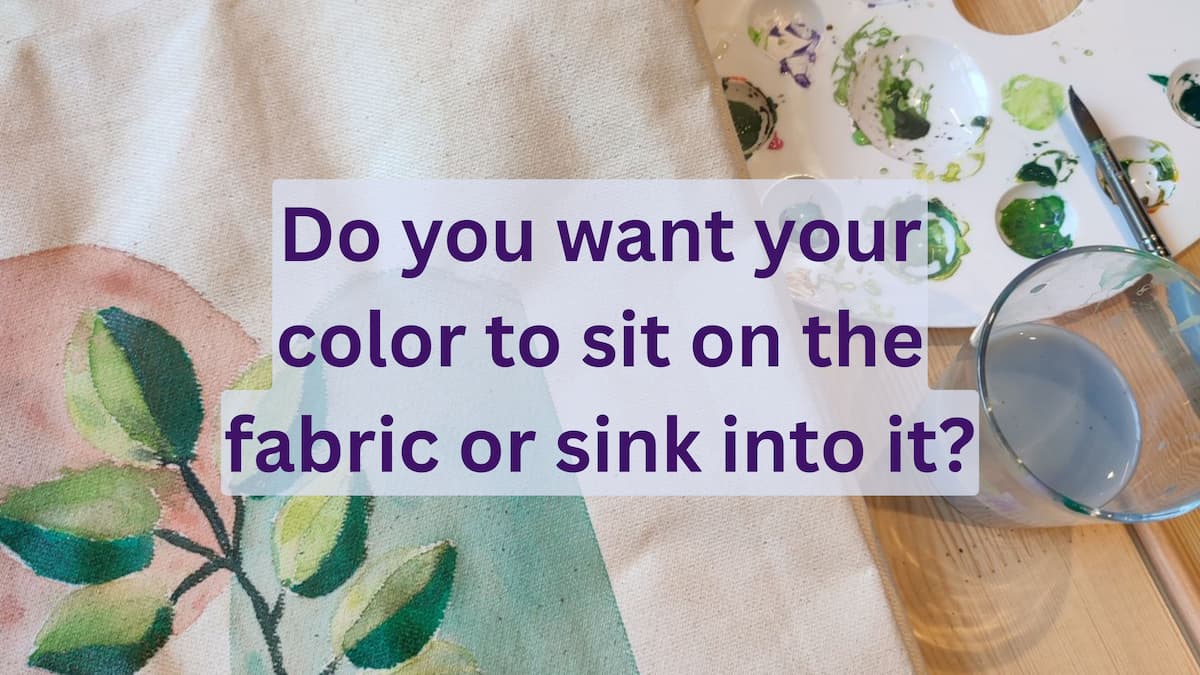
The First Decision: Paint vs. Dye vs. InkDo you want the color to sit ON the fabric or IN the fabric?
Fabric Paint (Acrylic Polymer + Flexible Binder): Sits on top of the fibers. It is the gold standard for crisp, detailed brushwork and opaque designs on dark canvas or denim.
Jacquard (Textile/Neopaque): The industry standard for brush-on application, engineered to leave the fabric surprisingly soft.
Pebeo (Setacolor): Premium French acrylics offering distinct, specialized lines for light vs. dark fabrics.
Createx: Originally designed for airbrushing, these fluid acrylics offer an exceptionally "soft hand" and soak deep into the weave even when applied with a traditional brush.
Fabric Dye (Chemical Fiber Alteration): Penetrates and changes the molecular color of the fiber itself. It offers zero texture, leaving the fabric feeling identical to its original unpainted state.
Jacquard: Dominates this category entirely. Whether using Procion MX for cold-water cotton tie-dye or iDye Poly for synthetic polyester blends, Jacquard is the go-to brand.
Screen & Block Printing Inks (Thicker Viscosity): Designed for bold graphic coverage, stenciling, or lino-block printing on textiles.
Speedball: The beginner standard. A water-based screen printing ink that cleans up easily while offering a great balance of open-time and opacity.
Permaset: An eco-friendly Australian brand. Their Supercover line is legendary among professionals for printing bright, flexible whites on black cotton without cracking.
Just as when painting on paper, you must select your medium based on the lightness or darkness of your background material:
For White & Light Fabrics: Use Jacquard Textile Color or Pebeo Setacolor Light. These are semi-transparent formulas that blend seamlessly like watercolor on cotton without building up heavy texture.
For Black & Dark Fabrics: Use Jacquard Neopaque, Pebeo Setacolor Opaque, or Permaset Supercover. These are heavily pigmented, opaque paints designed to block out dark denim or black cotton in a single coat.
For fine lines, signatures, graphic outlining, or detail work where a brush is too imprecise:
Marvy Uchida Fabric Markers: An illustrator favorite. Acid-free, non-toxic, and specially formulated to resist bleeding (feathering) along the fabric weave.
edding 4500 / 4600 Textile Pens: Robust pens engineered for graphic line work. Extremely resilient against repeated washing cycles (up to 60°C / 140°F).
If you skip these two critical steps, even the best professional paints will flake off or fade in the laundry.
Step 1: Pre-Washing (Scouring): New garments are coated at the factory with "sizing" (starches and chemical finishes) that prevents paint from gripping the fibers. Always wash new fabric with plain detergent (no fabric softener) and dry it completely before applying color.
Step 2: Heat Setting: Paints and printing inks require heat to permanently cure the acrylic resin into the weave. Once your work is completely dry, iron the reverse side of the fabric on a medium-high setting for 3–5 minutes (or use a heat press).
Walk into the store or browse below to grab these exact items for your project:
For Brushwork (Light Fabrics): Jacquard Textile Color or Pebeo Setacolor Light
For Brushwork (Dark Fabrics): Jacquard Neopaque or Pebeo Setacolor Opaque
For Airbrushing / Softest Feel: Createx Airbrush Colors
For Screen Printing: Speedball Fabric Ink (Starter) or Permaset Aqua Supercover (Pro)
For Dyeing: Jacquard Procion MX (Cotton) or Jacquard iDye Poly (Synthetics)
For Detail Outlining: Marvy Uchida Fabric Markers or edding 4500 Textile Pens
Explore our comprehensive product comparisons below to find the exact paints, dyes, and inks for your project—and consider leaving a review of your favorite brands to help the next artist!

Createx Fabric Colors
While Jacquard is the generalist and Pébéo is the "sun painter," Createx Colors (Connecticut, USA) is technically defined by application method. They are a global standard for airbrushing, but their unique resin technology makes them a secret weapon for brush-painting textile artists who want a zero-texture finish. Their chemistry focuses on high-performance resins that remain durable even when applied in microscopic layers.1. Createx Airbrush Colors (The Industry Standard)The "Soft Hand" AcrylicThis is the paint that defines the custom t-shirt industry (think boardwalk airbrush shirts).Resin Technology: Unlike standard acrylics that form a plastic "skin" on top of the fabric, Createx uses a specialized soft resin that bonds around the fabric fibers. This means the paint will not crack even if you stretch the shirt to its limit.Viscosity: It is fluid (like milk), designed to flow through an airbrush without clogging. For brush painters, this means it behaves like an ink, allowing for incredibly smooth gradients and watercolor-style washes without diluting the color strength.Heat Set Essential: It must be heat set (iron or heat press) to cross-link the resin. Once set, it is washable and dry-cleanable.Createx Airbrush Colors2. Wicked Colors (The Multi-Surface)The "Automotive" GradeThis is the "halo product" of the Createx line. It was originally engineered for automotive custom painting but is chemically formulated to be safe for textiles.High-Performance Binder: "Wicked" uses a durable sub-micron resin. This means it sticks to difficult surfaces like leather, canvas, and synthetic sneakers significantly better than standard fabric paint. It is the preferred choice for custom sneaker artists who need paint that won't peel off the rubber soles.UV Stability: It uses automotive-grade pigments that are completely lightfast. If you are painting a denim jacket that will be worn outdoors constantly, Wicked Colors will not fade.Detail: The pigment particle size is much smaller than standard Createx, allowing for microscopic detail work without "graininess."Createx Wicked Colors3. Illustration Colors (The Erasable)The "Correction" PaintThis is a unique technical innovation in the fabric paint world.Delayed Cross-Linking: Most acrylics dry permanently in minutes. Illustration Colors are formulated with a "delayed curing" resin. This allows you to use an eraser or a scratch tool to lift the paint off the fabric after it has dried (but before it is heat set).Subtractive Techniques: You can paint a solid block of black and then use a stiff brush or eraser to "remove" the paint to create highlights (like hair or fur textures), a technique impossible with Jacquard or Pébéo.Createx Illustration Colors4. Createx Opaque (The Coverage)The Dark Fabric SolutionCreatex separates their line into "Transparent" (standard) and "Opaque."Titanium White Load: The Opaque colors are loaded with titanium white to ensure they cover black t-shirts. However, because of the Createx resin, they are noticeably softer and less "rubbery" than Pébéo Setacolor Opaque.Technical SummaryBuy Createx Airbrush Colors if you want to create smooth gradients or washes that feel like part of the shirt.Buy Wicked Colors if you are customizing sneakers, leather jackets, or need automotive-grade durability.Buy Illustration Colors if you want to use erasers to create textures and highlights.

edding Textile Markers
While Jacquard and Pébéo dominate the fabric paint market, edding (Ahrensburg, Germany) is an authority on marker technology. Their approach to fabric is less about fine art and more about graphic precision. Their markers are famous for their specific ink flow systems that prevent the "bleeding" (spider-webbing) common with cheaper permanent markers on cotton.1. edding 4500 Textile Marker (The Graphic Standard)The "Coloring" PenThis is the workhorse of the line, designed for bold designs on light-colored fabrics (cotton, silk, linen).2-3mm Bullet Tip: It features a sturdy medium tip, similar to a standard Sharpie but with a fiber nib engineered for fabric drag. It is ideal for filling in large areas of color without streaking.Water-Based Pigment: Unlike solvent-based markers (which smell toxic), these use a neutral-smelling water-based pigment ink. It is extremely lightfast, meaning your designs won't fade after drying in the sun.Heat Fixation: The ink remains "open" until you iron it. Once ironed (no steam), the cross-linking process makes the design wash-resistant up to 60°C (140°F), which is significantly higher than most craft markers (usually 40°C).2. edding 4600 Textile Pen (The Detailer)The "Liner"If you are doing fine illustration or writing text on a shirt, this is the companion tool to the 4500.1mm Fine Tip: It uses a rigid fine point that allows for crisp outlines. It is widely used by illustrators for "inking" a sketch on fabric before filling it with the 4500.Bleed Control: The ink viscosity is slightly adjusted to be "drier," preventing it from wicking into the fabric threads and fuzzing out your crisp lines.System Compatibility: The colors of the 4600 match the 4500 exactly, allowing you to outline and fill with perfect color consistency.3. edding 8040 Laundry Marker (The Industrial)The "Boil-Proof" LabelerThis is arguably the most famous laundry marker in Europe. It is not for art; it is for Identification.95°C Resistance: While the art markers survive a warm wash (60°C), the 8040 is engineered to survive a boil wash. This makes it the standard for labeling nursing home laundry, chef's uniforms, and hospital scrubs that undergo industrial sanitization.Quick-Dry Resin: It uses a fast-drying, smudge-proof ink that bonds instantly to care labels and synthetic fabrics without needing to be ironed.4. edding 17 Funtastics (The Kid-Safe)The Classroom ChoiceDesigned specifically for children's craft projects.Wash-Out Protection: The ink is chemically formulated to wash off skin easily but stay on fabric permanently after ironing.Non-Toxic: It meets stricter safety standards (CE) for use in schools.Technical SummaryBuy the edding 4500 for bold colors and filling in designs on t-shirts.Buy the edding 4600 for fine outlines, writing, and detail work.Buy the edding 8040 if you just need to write a name on a label that will survive a hot boil wash.

Jacquard Textile & Fabric Colors
Jacquard (California, USA) is a king of textile chemistry. While brands like Golden or Liquitex make acrylics that can be used on fabric, Jacquard manufactures paints specifically engineered for fiber.The "Hand" Factor: The defining characteristic of Jacquard paints is their obsession with "Hand" (how the fabric feels after painting). Cheap fabric paints feel like a stiff plastic sticker. Jacquard paints are formulated to penetrate the fiber so the fabric remains soft and wearable.1. Textile Color (The Green Label)The industry standard for painting on light-colored fabrics.Opacity: Semi-opaque.Crucial Warning: These are designed for white or light fabrics only. If you paint "Textile Red" onto a black t-shirt, it will disappear or look muddy brown. You must use this on light backgrounds.Consistency: Medium body.It feels like heavy cream. It is perfect for brushing, stamping, and block printing.The "Hand": Very soft.Once heat-set, you can barely feel the paint on the fabric. It moves and stretches with the shirt.Best For: Customizing white sneakers, light denim, and t-shirt designs that need to feel professional.2. Neopaque (The Black Label)The solution for dark fabrics. "Neo" = New, "Opaque" = solid coverage.Opacity: Maximum.These are formulated with high-load pigments and opaque fillers. You can paint Yellow Neopaque directly onto a black hoodie and it will show up bright yellow with one or two coats.The Trade-Off: Stiffness.To get that opacity, the paint has more solids. Consequently, it has a "heavier hand" than the Textile line. It feels slightly more like a flexible vinyl patch on the shirt.Flexibility: High.Even though it is thicker, it is designed not to crack. It is excellent for leather, vinyl, and rubber (sneaker soles).Best For: Black t-shirts, leather jackets, and sneaker customization (specifically the rubber soles).3. Lumiere (The Metallic Star)The most famous metallic fabric paint in the world.The Finish: Flexible metallic.Most metallic acrylics crack when the fabric folds. Lumiere contains a specialized flexible binder that allows the metallic mica to bend with the fabric without flaking off.Opacity: High.Like Neopaque, Lumiere covers dark fabrics perfectly. "Lumiere Gold" looks brilliant even on black denim.Adhesion: Super-bond.This paint is famous for sticking to tricky surfaces. Cosplayers use it on EVA foam, and sneaker artists use it on leather.Best For: Cosplay armor, adding "bling" to denim, and leather accents.4. Dye-Na-Flow (The "Fake Dye")A high-flow acrylic that pretends to be a dye.Consistency: Water-thin.If you pour this on fabric, it spreads and bleeds exactly like ink or dye.The "Trick":It is actually a very thin acrylic paint. Unlike real dye (which requires soda ash and chemical bonding), Dye-Na-Flow is heat-set like paint.Because it is so thin, it has zero hand. You cannot feel it at all once it dries.Transparency: 100% transparent.It only works on light fabrics.Best For: Silk painting, sun printing, airbrushing (straight from the bottle with no thinning), and creating "watercolor" effects on cotton.5. The "Gotcha": Heat SettingJacquard paints are NOT permanent until you heat set them. If you skip this, they will wash out.The Iron Method (Best):Let the paint dry for 24 hours.Iron on the reverse side (or with a pressing cloth) for 3 minutes at the hottest setting the fabric can handle.Why? The heat melts the acrylic resin, fusing it into the fabric fibers.The Dryer Method:Throw the garment in a commercial dryer on the hottest setting for 35-45 minutes. (Home dryers often don't get hot enough for a 100% cure).The "AirFix" Alternative:If you are painting something you can't iron (like a couch or sneakers), you can mix a chemical additive called Jacquard AirFix into the paint. This chemically cures the resin over 72 hours without heat.6. Comparison: Which one do you need?Fabric is white/light? Use Textile Color (Softest feel).Fabric is black/dark? Use Neopaque (Best coverage).Painting on leather/shoes? Use Neopaque or Lumiere (Best adhesion).Want "watercolor" effects? Use Dye-Na-Flow (Spreads like dye).Want metallic? Use Lumiere (Industry standard).

Marvy Uchida Fabric Markers
If Jacquard and Pébéo are for "painting," Marvy Uchida (Japan) is the undisputed king of drawing. They dominate the market for fabric markers because they focus on ease of use. While paints require brushes, water cups, and cleanup, Marvy engineers their textile ink into sealed pens that require zero setup. They are technically distinguished by their "no-heat" chemistry.1. Marvy Fabric Marker (The Standard)The "No-Iron" ClassicThis is the most common fabric marker in the world. If you see a "fabric marker" in a craft store with a plain white barrel, it is likely this one.No Heat Setting: This is the primary selling point. Unlike Speedball or Createx, which must be ironed to be permanent, Marvy’s ink cures in the air. You simply draw, let it dry for 24 hours, and it is wash-fast.Dye-Based Ink: The ink is transparent. It acts like a watercolor or a Sharpie for fabric. It dyes the fibers rather than sitting on top.Transparency Limit: Because it is dye-based, it only works on light-colored fabrics. If you draw on a black t-shirt with a Red Marvy marker, it will disappear.2. DecoFabric Marker (The Opaque)The Paint MarkerIf you need to draw on denim, black canvas, or leather, you cannot use the standard marker. You need the DecoFabric.Valve-Action System: You can identify this pen by the "shake and pump" mechanism. It contains actual liquid acrylic paint inside the barrel, not just dye.Opacity: It uses opaque pigments that sit on top of the fabric. White DecoFabric will show up bright white on a black jacket.3mm Bullet Tip: It features a stiff fiber nib that is excellent for outlining and lettering on sneakers and caps where a brush would be too soft.3. Tee Juice (The Broad Coverage)The "Flow" MarkerThis is Marvy’s answer to the "Dye-Na-Flow" liquid paints, but in a marker form.High-Flow Ink: The ink is formulated to be much wetter than the standard marker. It bleeds slightly into the fabric, allowing for smooth color blending and filling large areas quickly.Broad Tip: It typically comes with a wide nib, making it the tool of choice for "all-over" designs or faux tie-dye effects.4. Fabric Brush Marker (The Calligraphy Tool)The Artist's ChoiceThis is a variation of the standard marker but features a flexible brush tip.Variable Line Width: The tip allows you to go from a hairline stroke to a thick bold stroke just by changing pressure. It is the standard tool for hand-lettering quotes onto tote bags and t-shirts.Technical SummaryBuy the Marvy Fabric Marker (Standard) if you are working on white cotton and want a "zero mess" tool for kids or quick sketches.Buy the DecoFabric Marker if you are customizing dark denim, leather, or black shoes.Buy the Fabric Brush Marker if you are doing hand lettering or calligraphy on fabric.

Pebeo Fabric Colors
These lines are designed for permanent application on natural and synthetic fibers, requiring heat setting to become wash-resistant.1. The Marker System: Pebeo 7AFormerly known as "Setaskrib," the branding has transitioned to "7A." These markers are designed for ease of use (no palette required) and precision.A. 7A Light Fabrics Markers (Transparent Ink)Designed exclusively for white or light-colored fabrics. The ink dyes the fiber rather than sitting on top, preserving the fabric's soft texture.Nib: 1mm Brush Tip (flexible, ideal for calligraphy and sketching).Ink Properties: Water-based, transparent, fluid.Best Substrates: Cotton, jersey, linen.Color Range: 18 colors, including fluorescents.B. 7A Opaque Markers (Matte Ink)Designed for dark fabrics (denim, black cotton) but works equally well on light fabrics. The ink is heavier and sits on top of the fiber to ensure visibility.Nib: 4mm Round Bullet Tip (sturdy, ideal for filling and bold lines).Ink Properties: Highly opaque, matte finish, excellent coverage.Best Substrates: Denim, canvas, dark t-shirts.Color Range: 18 colors, including metallics (Gold, Silver, Copper) and pastels.2. The Paint System: Pebeo SetacolorLiquid paints applied with a brush, sponge, or stencil. These offer professional durability and are intermixable.A. Setacolor Light FabricsFinish: Matte, transparent.Texture: Very fluid; leaves almost no "hand" (stiffness) on the fabric.Special Technique: Because it is transparent and fluid, it is the only line compatible with Sun Printing (placing objects on wet paint in the sun to leave a negative impression).B. Setacolor OpaqueFinish: Matte, opaque.Texture: Rich and covering. Can cover black fabric in one coat.Variations:Standard Opaque: Flat colors.Shimmer: Iridescent/pearl finish.Suede Effect: Expands slightly when heated to create a fuzzy, flocked texture.C. SetasilkPurpose: Specifically for silk painting.Properties: extremely fluid (like dye), spreads rapidly, preserves the silk's sheen. Requires Gutta (resist) to contain the color.3. The Leather System: Setacolor LeatherA specialized line distinct from the standard fabric paints, formulated specifically for leather and faux-leather (sneaker customization).Paints: High-resistance acrylics that resist scuffing and folding (tested to 100,000 folds).Leather Markers: Extra-fine tip markers specifically for detailing leather.Auxiliaries: Requires a preparer-deglazer before painting and a varnish (matte or gloss) after painting to seal.4. Instructions: Fixing & careFor standard 7A Markers and Setacolor Paints (excluding Leather):1. ApplicationWash fabric without softener before starting.Apply color and allow to air dry for at least 2 hours.2. Fixing (Heat Setting)You must heat set the color to make it permanent. Choose one method:Iron: Iron on the reverse side of the fabric for 5 minutes on the "cotton" setting (No Steam).Oven: Place the item in a domestic oven for 5 minutes at 150°C (300°F). (Ensure fabric is heat-stable first).3. WashingWait 48 hours after fixing before the first wash.Washable up to 40°C (104°F).

Permaset Aqua Textile Inks
If Speedball is the "classroom standard," Permaset Aqua (Colormaker Industries, Australia) is the "eco-professional" standard. They are famous for solving the biggest problem in water-based screen printing: Opacity.Most water-based inks are transparent and disappear on black t-shirts. Permaset engineered a high solids formula that covers black fabric in one coat without the toxic solvents found in plastisol inks. They are widely considered the most eco-friendly professional ink on the market.1. Permaset Aqua SupercoverThe Dark Fabric SpecialistThis is the product that put Permaset on the map. It is the direct rival to toxic plastisol inks.High Solids Acrylic: Standard water-based ink is mostly water (which evaporates). Supercover is mostly resin and pigment. When it dries, it leaves a thick, opaque layer that sits on top of the fabric fibers.One-Coat Coverage: You can print Supercover White directly onto a black t-shirt, and it will be bright white. You do not need a "flash" (underbase) layer, which saves significant time for screen printers.Durability: Because it has a higher resin count, it is incredibly wash-fast and flexible, preventing the "cracking" often seen with cheaper opaque inks.2. Permaset Aqua Standard (The Soft Hand)The Light Fabric ChoiceThis is their standard line, designed specifically for white or light-colored fabrics.Zero Hand: Unlike Supercover (which you can feel), the Standard ink sinks completely into the fiber. Once heat-set, you can close your eyes and run your hand over the print, and you won't be able to tell where the ink is.Transparency: These colors are translucent. They mix visually with the fabric color (e.g., blue ink on a yellow shirt will look green). They are perfect for "watercolor" style screen prints and CMYK process printing.Eco-Friendly: The formula is 100% solvent-free and water-based, making it safe for printing on baby clothes and underwear.3. Permaset Aqua Puff Paste (The 3D Additive)The Texture AgentWhile many brands sell "puffy paint" in squeeze bottles, Permaset sells a professional additive that you mix into your ink.Heat Activated: It looks like normal ink when you print it. It only "puffs" when it hits the heat of your dryer or iron. This allows for incredibly sharp edges that bottle-applied puff paint cannot achieve.Customizable: You mix it with any Permaset color. You control the ratio—add a little for a subtle "suede" feel, or add a lot for a dramatic 3D relief.4. Permaset Aqua Phosphorescent (The Glow)The Night SpecialistPermaset produces what is widely regarded as the strongest glow-in-the-dark ink in the water-based market.Phosphorescent Green: It is a milky white/green color in daylight but glows a vivid radioactive green in the dark.Layering: Because it is technically translucent, it works best when printed over a white underbase (or Supercover White) to maximize the glow intensity.Technical SummaryBuy Permaset Aqua Supercover if you are printing on black or dark t-shirts and want solid coverage without chemicals.Buy Permaset Aqua Standard if you are printing on light fabrics and want a print you can't feel ("soft hand").Buy Permaset Aqua Puff Paste to add 3D texture to your designs.

Speedball Textile Inks
While Jacquard and Pébéo are famous for painting on fabric, Speedball (North Carolina, USA) is an undisputed king of printmaking. If your goal is to print 50 t-shirts with a screen or stamp a repeating pattern onto tote bags, Speedball is the industry standard. Their chemistry is divided into two distinct systems: Screen Printing (fluid) and Block Printing (tacky).1. Fabric Screen Printing Ink (The Classroom Standard)The Volume ChoiceThis is the most common fabric ink found in schools and DIY garage studios. It is designed to be affordable, safe, and easy to clean up.Water-Based: Unlike professional "Plastisol" inks (which require toxic solvents), Speedball ink cleans up with soap and water. It is non-flammable and has no offensive smell.Soft Hand: When printed properly on light fabrics, it sinks into the fibers, leaving a print that feels soft rather than plastic.Heat Set Required: Like Jacquard, this ink must be heat set (ironed) to become permanent. If you wash it before ironing, the image will wash out.2. Opaque Fabric Screen Printing Ink (The Dark Fabric Specialist)The "Flex" UpgradeStandard Speedball ink is transparent (it disappears on black shirts). The Opaque line (often labeled as Flex or with "Pearlescent" colors) is engineered for dark backgrounds.High Opacity: It contains heavy pigments that sit on top of the fabric, ensuring that "White" ink actually looks white on a black shirt, rather than turning grey.Flexibility: As the name suggests, it is formulated to stretch with jerseys or ribbed cotton without cracking.3. Fabric Block Printing Ink (The No-Heat Wonder)The Stamping StandardThis is technically unique in the art world. Most block printing inks are for paper (and wash out of clothes). Speedball engineered a specific oil-based formula that is water-miscible.No Heat Setting: This is the major selling point. Unlike screen ink, you do not need to iron this. The oil-based resin "cures" over 7 days. After one week, it is permanent and washable.Tacky Consistency: It is thick and sticky (like toothpaste), designed to be rolled onto a linoleum block or rubber stamp with a brayer. It will not drip or run, allowing for crisp, sharp edges on stamps.Water Clean-Up: Despite being oil-based, it contains a chemical emulsifier that allows it to wash off your hands and tools with soap and water.4. Night Glo Fabric Ink (The Specialty)The PhosphorescentSpeedball is one of the few brands that produces a professional-grade glow-in-the-dark ink for textiles.High Visibility: It acts like a battery—it absorbs light during the day and emits a bright green glow in the dark. It is popular for Halloween costumes and concert gear.Application: It is part of the screen printing line, so it is fluid and brushable.Comparison: Screen vs. Block InkBuy Fabric Screen Printing Ink if you are making t-shirts with a screen or stencils and want a soft feel.Buy Fabric Block Printing Ink if you are using rubber stamps or linoleum blocks and don't want to hassle with ironing the finished piece.