Introduction To Oil Painting Mediums
The Rule
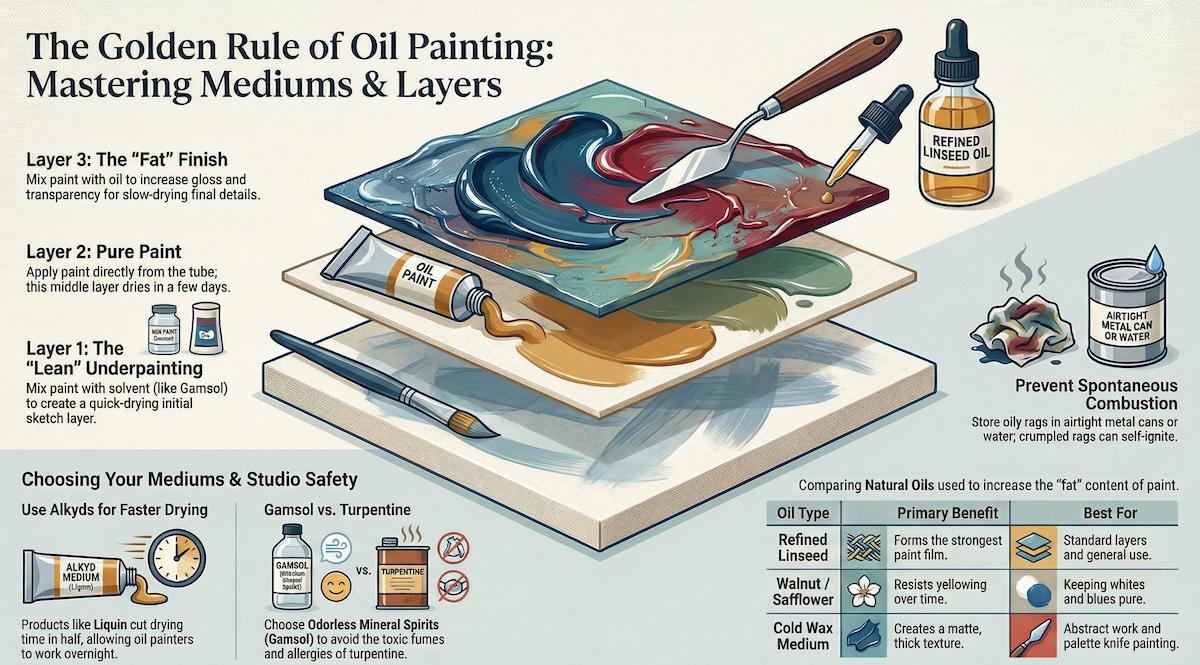
You must always paint "fat over lean."
Lean: Paint mixed with solvent (thinner). It dries quicker.
Fat: Paint mixed with oil (thicker). It dries slower.
Layer 1: Thin paint (mixed with Gamsol). Dries in hours.
Layer 2: Pure paint. Dries in days.
Layer 3: Fat paint (mixed with linseed oil). Dries in weeks.
Why: If you put a fast-drying layer on top of a slow-drying layer, the bottom layer will shift and shrink as it cures, cracking the dry crust on top.
Solvent is used to clean brushes and to thin paint for the first "sketch" layer.
1. Odorless Mineral Spirits (OMS)
The Gold Standard: Gamblin Gamsol.
What it is: Petroleum distillate refined to remove the harmful aromatic compounds.
Safety: It is safer than turpentine, but "odorless" does not mean "non-toxic." The fumes are still there, and you still need ventilation.
Use: Thinning paint for the underpainting and for cleaning brushes.
2. Turpentine
What it is: Distilled from pine tree resin.
The Smell: Smells like a pine forest (strong).
Why avoid it: It is a sensitizer. Over time, many artists develop severe allergies to it. It absorbs through the skin. Stick to OMS (Gamsol).
This is what makes oil paint "oily." Adding this increases gloss, transparency, and drying time.
1. Linseed Oil (The standard)
Refined: The standard pale yellow oil. Dries relatively fast (for an oil) and forms the strongest film.
Cold Pressed: Higher quality, purer, and slightly more yellow.
Use: Add a few drops to your paint in the final layers to make it flow like melted butter.
2. Walnut & Safflower Oil
The Difference: Linseed oil yellows slightly over time. Walnut and safflower oils are clearer.
Use: Use these specifically for whites and blues. Because they don't yellow, they keep your bright highlights pure. They dry slower than linseed oil.
This is the modern revolution. Alkyd resin is a synthetic binder that makes oil paint dry fast (usually overnight).
1. Liquin (Winsor & Newton)
The Product: A brownish gel that turns clear when mixed.
The Effect: It cuts drying time in half. It makes the paint silky and thixotropic (it stays in place until you brush it).
The Look: High gloss.
Verdict: The #1 medium in the world for a reason. It allows oil painters to work almost as fast as acrylic painters.
2. Galkyd (Gamblin)
The Difference: Similar to Liquin but stickier and more fluid (like syrup).
Galkyd Lite: A thinner version that leaves brushstrokes less visible.
Galkyd Gel: A stiff jelly for impasto work.
1. Cold Wax Medium (i.e. Gamblin)
What it is: Beeswax mixed with a little solvent into a white paste.
The Effect: It creates a matte finish (no gloss). It adds body to the paint, allowing you to sculpt thick peaks like cake frosting.
Use: Perfect for abstract texture work.
2. Neo Megilp
What it is: A modern recreation of a lost 18th-century medium (Maroger).
The Feel: It makes the paint feel "gelatinous" but smooth. It holds brushstrokes perfectly but remains silky. It dries satin (semi-gloss).
This is not a myth. It is real, and can be very dangerous
The Danger: Oil dries by oxidation, which generates heat. If you ball up a rag soaked in linseed oil or Alkyd and throw it in the trash, the heat gets trapped. It can and will catch fire on its own.
The Protocol: You must store oily rags in an airtight metal can or soak them in water before disposal. Never leave a crumpled oily rag on your studio floor.
The best starter kit:
Gamblin Gamsol (Small Bottle): For cleaning and underpainting.
Gamblin Solvent-Free Gel OR Winsor & Newton Liquin:
Why: Use the Gel if you want non-toxic. Use Liquin if you want speed. You don't need raw linseed oil to start; these modern mediums are easier to control.
What To Avoid
Hardware store paint thinner.
Why: It is full of impurities and sulfur that will rot your canvas and make your house smell like a gas station. Only buy "Artist Grade" OMS.